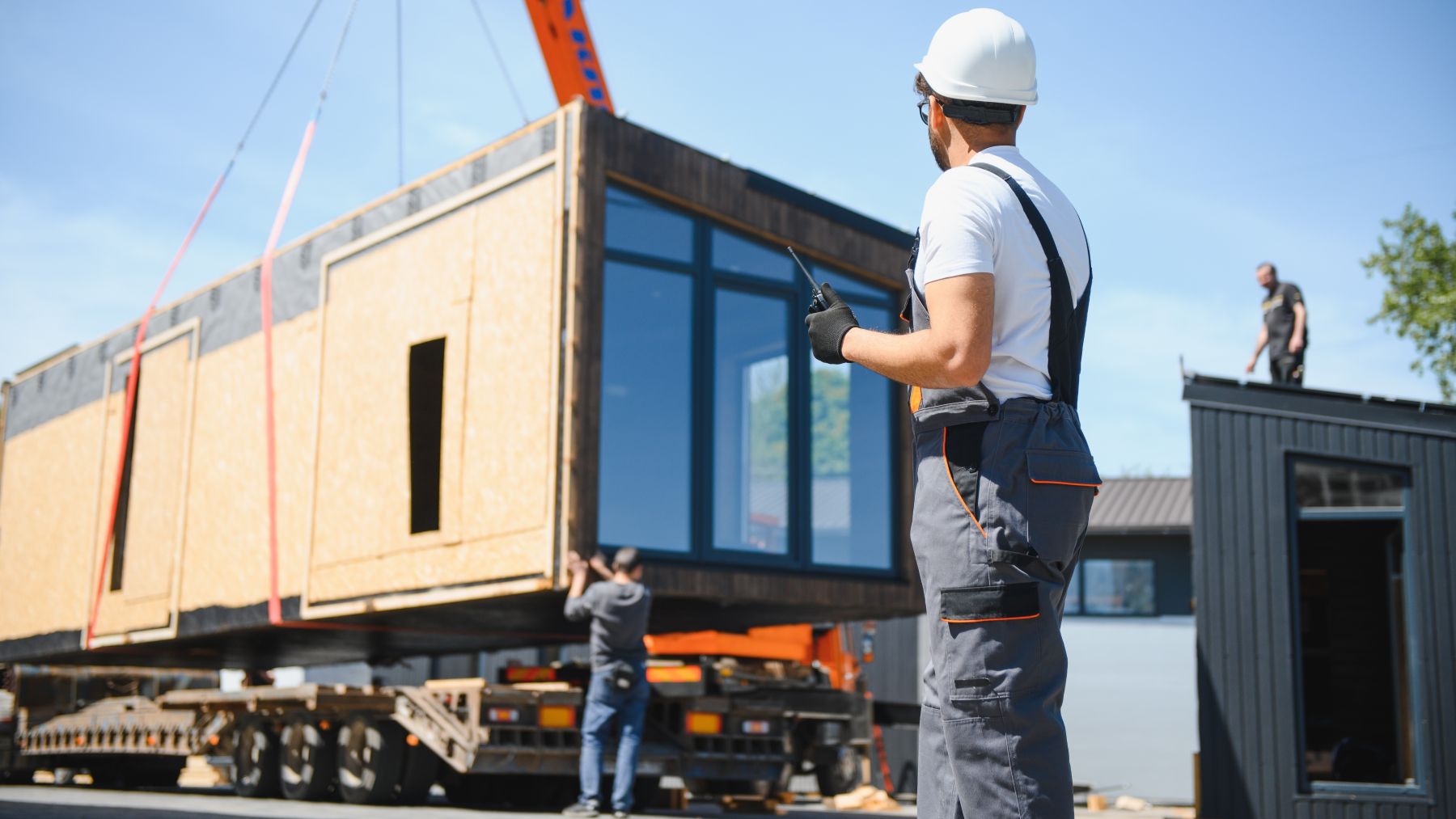
Industrialization is creating different kinds of jobs in the construction industry. This offers opportunities for new target groups, such as asylum seekers, people recovering from mental health issues, or young people who learn better through hands-on experience than in a classroom. Organizations in the construction industry are joining forces and showcasing their social commitment. A heartwarming story.
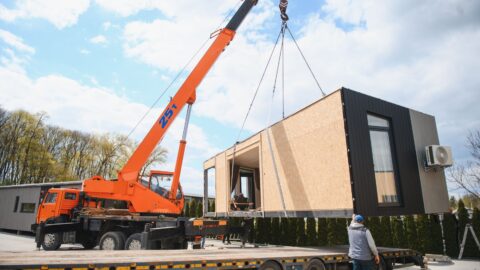
From rain to comfort. From technology to plug-and-play. Whereas work used to take place largely on the construction site, a growing portion is shifting to factories and workshops. There, construction processes are broken down into smaller, often repetitive tasks. This offers opportunities for people who need extra support, notes Esmé Rijs, director of Cedris, an organization that represents about 100 work development companies.
“By breaking down the work process into smaller tasks and having more and more work take place in a sheltered environment, it becomes easier to deploy people from work development companies,” says Rijs.
Five-legged sheep
Employment development agencies assist people who need support in finding and retaining suitable work. They traditionally collaborate extensively with companies operating in sectors such as landscaping, logistics, and hospitality. In the construction industry, such collaboration is even less common, even though this sector is grappling with a persistent labor shortage. For this reason, Rijs is now partnering with various organizations in the construction sector to ensure that the opportunities offered by employment development agencies are not left untapped.
According to Rijs, this collaboration does require a different approach to organizing work. By organizing work differently, construction companies can reach a group of potential employees who are often overlooked at present. “The construction industry is willing, but it’s still organized in a fairly traditional way. We’ve been doing the work the same way for a long time, with people who are expected to be able to do everything. But those ‘jack-of-all-trades’ just don’t exist anymore.”
To encourage collaboration between the construction industry and employment development agencies, Cedris and the collective bargaining parties for Construction & Infrastructure signed a memorandum of understanding on October 20. The parties aim to share existing best practices more widely and launch new pilot programs. A partnership is being explored with, among others, the Van Miltenburg Group in Utrecht. In Rotterdam, opportunities are being explored to guide status holders toward employment in the construction industry.
Adapt the work, not the employee
The possibilities extend beyond the relatively simple production tasks in industrial construction. According to Leendert Bos, innovation program manager at Cedris, employers regularly underestimate what people with special needs are capable of, especially when combined with modern technology.
“Technological aids can play an important role in this,” Bos explains. “Think of digital work instructions, translation devices, robotic arms, and exoskeletons. With visual cues, even employees who don’t have a sufficient command of the Dutch language or who struggle with written instructions can perform their tasks. For example, we work with systems that project work steps onto a workbench. We then omit certain steps, and it turns out that people can independently perform even much more complex tasks.”
In addition, this target group is very diverse. People often immediately think of those with physical or intellectual disabilities, but it also includes asylum seekers, people recovering from mental health issues, and young people who learn better through hands-on experience than in a classroom.
Bos cites the example of status holders who already worked as carpenters in their countries of origin. “These people sometimes already have the professional skills and experience, but still need to learn how things work in the Netherlands. By combining language instruction with work, they can get started much more quickly.”
Support remains a stumbling block
However, hiring this group of workers requires some adjustments. Construction companies must be willing to reorganize their work processes and invest time in mentoring. It is precisely the latter that poses an obstacle in a sector with high work pressure and an already tight labor market. “In the past, the apprentice-journeyman system was much more common,” says Bos. “Experienced employees used to mentor newcomers. These days, even those skilled workers are fully engaged in the primary production process. So the question is: who’s going to mentor these people?”
According to Rijs, employment development agencies can play an important role in this regard. They have experience with job coaching and on-the-job training and can help employers adapt their work processes. “Companies often say they’re willing to hire these people but don’t know how to support them or simply lack the capacity to do so. That’s exactly where we can offer support.”
Opportunities in circular construction as well
In addition to prefabricated construction, Cedris sees opportunities in circular construction. Dismantling, sorting, processing, and repurposing used building materials requires labor and offers opportunities to divide up the work.
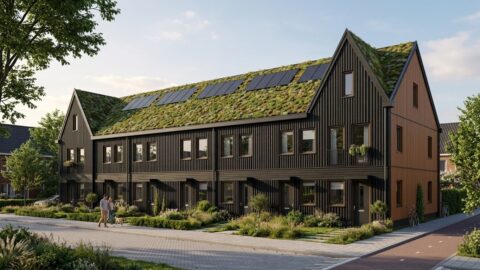
Bos points to a project in which the work-development company Empatec is involved in repurposing building materials from a former ABN AMRO office. “Circularity is about materials that are harvested and then given a new purpose. That’s where opportunities lie for our companies. In addition, there are also opportunities to outsource sub-contracts to employment development agencies, such as components for prefabricated homes, including dormer windows.”
From temporary assignments to long-term employment
A key point is that the collaboration must not be limited to temporary jobs. According to Bos, current policy regarding Social Return on Investment (SROI) must also be more focused on sustainable development. “We want to move away from situations where someone does simple, temporary work at a construction company for six months. It’s better to use that time to learn professional skills or earn a diploma, so that the chances of securing permanent employment are much greater.”
Specific targets for the number of new jobs have not yet been set. However, the parties involved do want to expand successful initiatives and establish new partnerships. For Rijs, the ultimate goal is clear: to help more people find sustainable employment, while construction companies increase their available capacity.
To achieve this, she says, the sector must above all be willing to look at employees and job tasks in a different way. “You have to show that it works and how it works. Ultimately, it should become second nature for construction companies to collaborate in this way.”
Want to respond?
Would you like to comment on this story? Send an email to Editor-in-Chief Thomas van Belzen at Thomas.van.belzen@jaarbeurs.nl
This is an article from Construction and Installation Hub. Want to keep up with all the news from the construction and installation industry? Then take a look at the hub and sign up for the online community.
↗