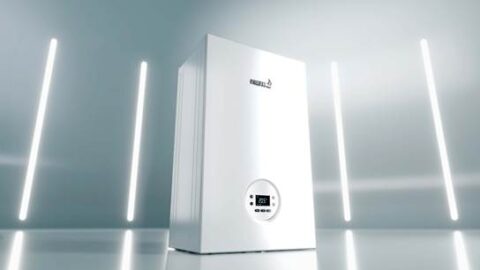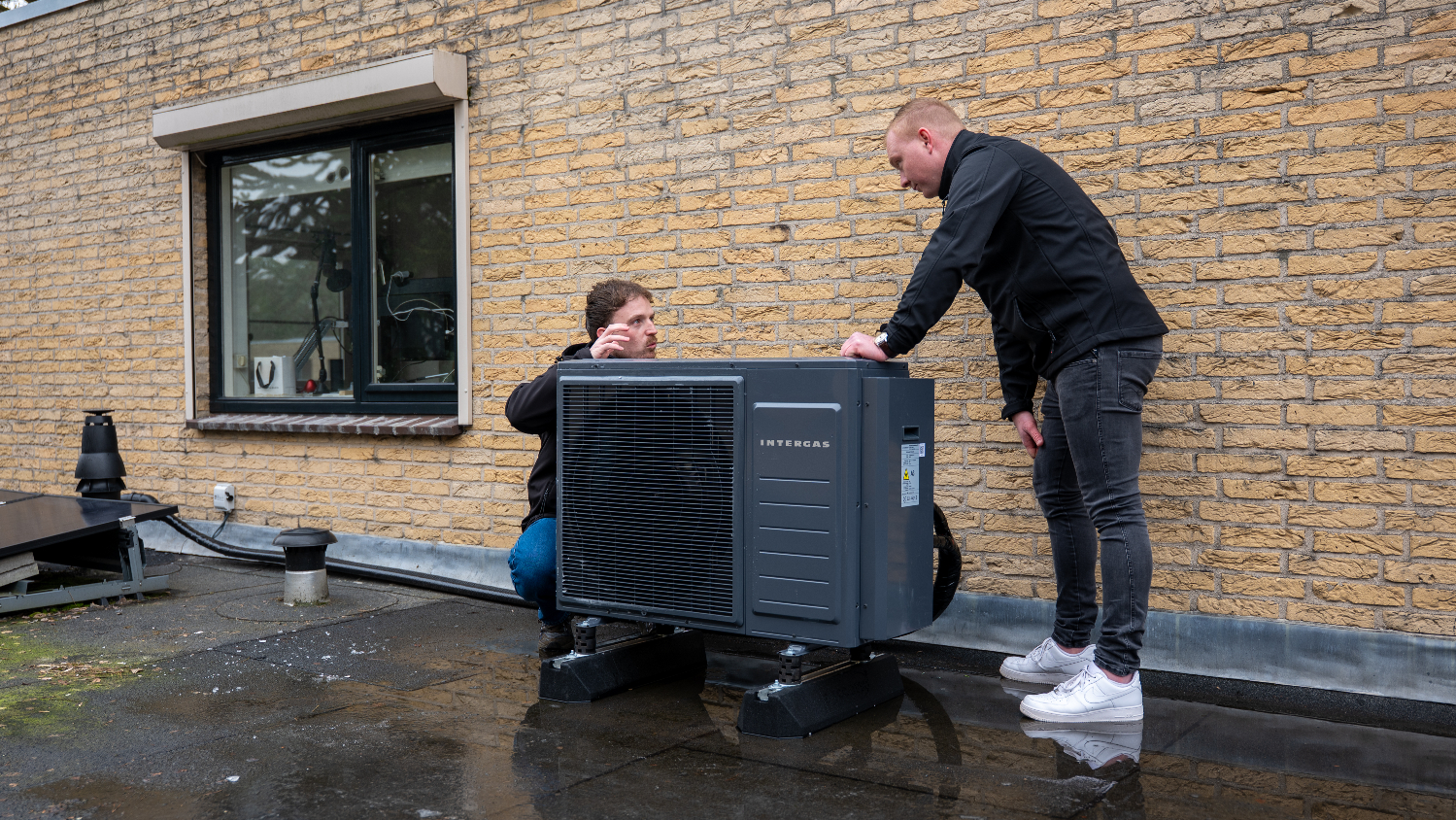
Intergas’s new Xtend Eco 7kW is designed for larger homes to help save even more on gas consumption. During development, the manufacturer paid close attention to simplicity and reducing noise levels. How did the design come about? “We’re also going to test a cascade configuration.”
“When we started developing the Xtend Eco series two years ago, we already planned to add a 7 kW model to the portfolio alongside the 5 kW model,” says Guido Vedder, now Product Category Manager for Hybrid Systems at Intergas. “In my previous role as R&D Project Manager, I closely oversaw the development of the Xtend Eco series. Early on, we recognized that a 5 kW heat pump is the ideal solution for many homes, thanks to its high efficiency and low grid load. At the same time, we saw that there was a clear need for more capacity for larger homes with higher gas consumption. With the introduction of the Xtend Eco 7 kW, we can now also offer that target group an attractive hybrid solution that will allow them to save significantly.”
Don’t overcomplicate it
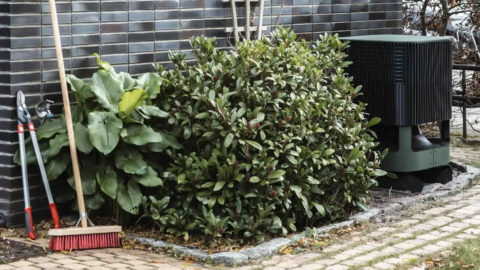
Intergas likes to keep its products as simple as possible. “By that we mean: with as few parts as possible,” says Vedder. “Because what isn’t there can’t break. Once you have a simple design, the product can immediately be more compact and lighter. This is especially convenient for installers when it comes to a heat pump’s outdoor unit. The Xtend Eco 5 kW weighs 64 kilograms, and the 7 kW model weighs just 84 kilograms. That’s really light and compact compared to what’s currently available on the market.”
Low-noise design
During the design phase, a great deal of attention was paid to the heat pump’s noise level. “The most obvious way to make a heat pump quieter is to design a larger unit,” says Vedder. “With a larger housing, you can use a larger fan that runs at a lower speed, and there’s more room for sound insulation. But we deliberately chose to stay within the existing compact design. That meant we critically examined noise reduction for every component, so that we could create a heat pump that’s as quiet as possible—even without a larger unit.”
That, in particular, posed a major technical challenge for the engineering team. “Ultimately, we developed a system with dual decoupling of the compressor. Special damping rubber pads have been installed on the inside of the heat pump’s base plate. A plate was mounted on top of that, and on that plate we assembled the plate heat exchanger and the compressor, which in turn sits on its own damper.”
This entire assembly, which is located inside the heat pump, is housed in a special metal enclosure designed to be as airtight as possible. “And that housing is lined with two types of materials that filter out the noise source in both the higher and lower frequency ranges. A great deal of development time went into this, and as a result, we succeeded in making the heat pump as quiet as possible.”
Existing grid connection
While the previous generation of the Xtend Eco used R32 refrigerant, the current 5 kW and 7 kW models use the more environmentally friendly R290 (propane), which provides some efficiency gains. Vedder: “You can deliver more power at lower outdoor temperatures, so the moment the furnace kicks in can be delayed longer. This allows you to run on electricity more often and for longer periods, resulting in additional savings on gas consumption. During development, special attention was also paid to making the heat pump compatible with existing electrical connections. Thanks to its relatively low power requirements, a single-phase connection is sufficient.”
Plug-and-play
To make things as easy as possible for installers, a great deal of attention has been paid to a complete range of accessories, including vibration dampers, wall brackets, freeze protection, flexible hoses, and elbow fittings. Vedder: “All these components were developed specifically for the heat pump and fit together seamlessly. Thanks to the smart use of male and female threads, the parts can be easily connected without additional fittings. This not only speeds up installation but also reduces the risk of errors. Installers particularly appreciate that the system is designed as a single unit, allowing them to complete a full installation with fewer parts and fewer steps.”
In cascade
Finally, Guido Vedder reveals that Intergas is about to test a cascade configuration. “This will allow you to connect two outdoor units to a single indoor unit, linked in series. Why? Many people want a hybrid solution for the next seven to eight years, but they also want the option to expand the capacity down the line if needed. The piping will already be in place, and the indoor unit will already be installed, so we asked ourselves: how can you do that without a major investment? The solution is to add a second 7 kW or 5 kW unit. In a cascade configuration, which means that pipes and other components don’t need to be expanded.”
Intergas will be testing this live in the field during the upcoming heating season, after which it should become available as a software update sometime around March or April of next year. This applies to anyone who already owns an Xtend Eco or plans to have one installed in the near future.

This is an article from Construction and Installation Hub. Want to keep up with all the news from the construction and installation industry? Then take a look at the hub and sign up for the online community.
↗