Water, heat, solar power, and electricity come together in a single smart system. This gives installers more influence than ever before. Those who invest in collaboration, training, and digital expertise can become the architects of the built environment.
Anyone looking at the installation sector sees opportunities above all else. Homes need to transition away from natural gas, buildings are becoming smarter, and both electricity and drinking water require more conscious use. As a result, installers are getting involved earlier in the process and remaining involved for longer—from design and consultation to monitoring and maintenance.
It hasn’t been without its hiccups
This development has not been without its setbacks. The heat pump market shrank by 30 percent in 2024, after companies had actually invested in growth. The Heat Pump Association points to fluctuating government policy as a major cause. The solar market is also changing. Holland Solar projected 2.08 gigawatts-peak of new capacity for 2025, the lowest level since 2020. The end of net metering, negative electricity prices, and grid congestion are making the retail sale of solar panels less attractive. In addition, current geopolitical tensions are also having a significant impact.
But that is precisely where the opportunity lies: the market is shifting from installing as many devices as possible to creating as much value as possible.
From installer to system manager
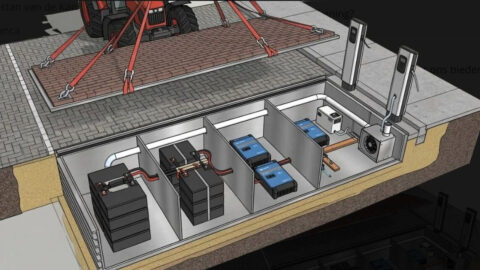
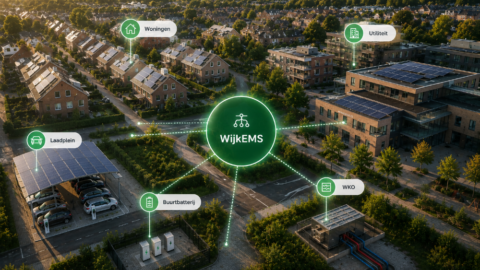
A panel, heat pump, or battery is no longer the end product; it is the overall system that determines efficiency. Generation, heating, storage, charging points, and consumption must respond to energy prices and available grid capacity. As a result, mechanical engineering and electrical engineering are increasingly converging.
During this year’s opening of VSK+E , Mark Harbers, chairman of Techniek Nederland, referred to the installer as an “energy director.” Wijnand van Hooff of Holland Solar speaks of a shift from maximum production to flexibility and smart usage. These are more than just buzzwords. Installers who understand consumption profiles, master control technology, and can advise customers well add significantly more value than companies that merely install equipment.
Water is the next big opportunity
A similar shift is taking place in the plumbing sector. In July, Rijkswaterstaat reported an actual water shortage. Households use an average of approximately 118 liters of drinking water per person per day; the government’s target is 100 liters. Water technology expert Eric van der Blom therefore advocates for a “drinking water transition,” featuring water-efficient showers, leak detection, and the safe reuse of rainwater and graywater.
New markets are opening up
This opens up a new market for installation companies. They can make water conservation just as much a given as energy efficiency. Solid craftsmanship remains essential in this regard: incorrect connections between drinking water and alternative water systems can pose health risks. Safe design, installation, and maintenance are therefore becoming more valuable—not less important.
Pioneers put innovation into practice
The most interesting innovators demonstrate that innovation isn’t solely about hardware. Comfort Partners won the Innovation Pioneer 2026 award with Lotte, an AI assistant that handled a quarter of service requests within a month. Breman is experimenting with a humanoid robot for heavy and repetitive work. Kuijpers renovates offices while retaining as much of the existing systems as possible and using dynamic software. TNO researcher Arjen Adriaanse particularly praised the practical scalability of such solutions.
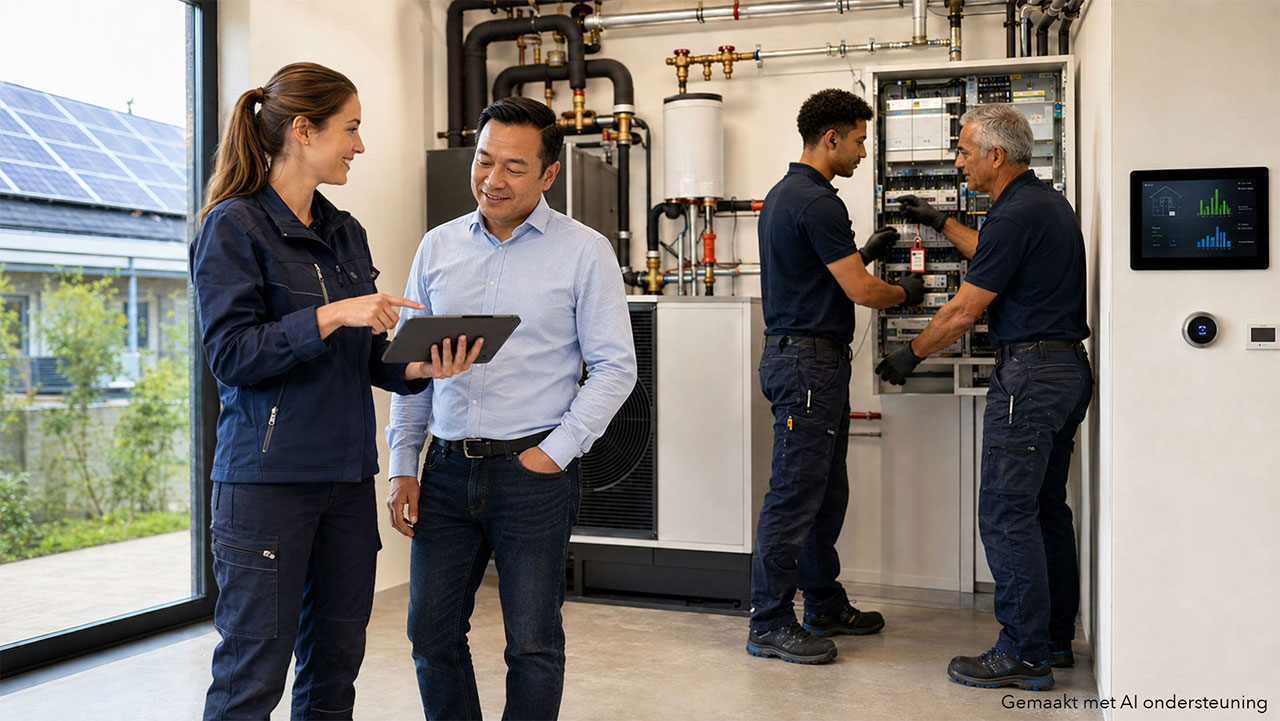
The contrast between the old guard and the young guns can also be productive. Experienced technicians recognize sounds, wear and tear, and unsafe situations that no dashboard can fully capture. Younger people often navigate more naturally between apps, data, and connected systems. Bring those qualities together, and experience becomes not knowledge that disappears, but a foundation upon which innovation can occur more quickly.
Learning is part of the job
The labor market forecast published last year by Wij Techniek underscores both the scale of the challenge and the opportunity. By 2029, 121,000 new workers will be needed to support growth and compensate for the departure of 118,000 employees. Seventy percent of these new hires will have to come from other sectors. At the same time, nearly half of employees under 25 leave the industry within a year.
This presents a clear challenge for employers: not just recruiting people, but offering them prospects. Consistent mentoring, safe teams, clear career paths, and on-the-job training make all the difference. The Lomans Academy demonstrates how this can be done: young people and lateral entrants combine vocational education with hands-on experience and a dedicated mentor, while on-the-job trainers also return to the classroom.
The same opportunity exists for training programs. Don’t train people for a single piece of equipment or discipline, but for systems thinking: electrical engineering and mechanical engineering, water safety, digital control systems, customer consultation, and fault diagnosis. The future doesn’t call for a single installer who can do everything, but for teams that connect knowledge. It is precisely this that will enable the sector to grow into one of the most influential forces behind the sustainable built environment.